Tuesday, March 10, 2026

Orange Roots #9

NEED TO KNOW

Orange Roots #9: Thank you for coming to class and for making this journey fun and meaningful for your kids!

SPRING BREAK: No class next week due to Spring Break. Check the calendar in your student's workbook for details. See you on the 24th/25th!

LET'S PLAY MUSIC SPIRIT WEEK: Let's Play Music Spirit Week is all about sharing, and this year I have requested specifically that you share with adding a Google review to my business listing. THANK YOU to those already submitting Google reviews. I am so grateful, and so humbled by your kind words!
Here is a link to share FAQs of the program and my studio with your local friends. Your not-local friends probably have a Let's Play Music teacher by them, so share with them too! 
* Use the hashtag #WeLoveLPM2026 to see what other folks are sharing on social media. 
* The LPM corporate office is hosting giveaways all month long. Check out their IG (@letsplaymusic_official) or FB (Let's Play Music - Making Musicians) for details on how to enter.

REGISTRATION FOR FALL: My fall registration is open. If you have friends who are interested in starting 1st Year, you can send them the link from above for an overview of the program and answers to the most frequently asked questions. Also let me know and I'll invite them for a studio tour and sample class! If you have an upcoming Red Balloon, here is the link to sign up kids who will be 4 by September! As always, if you have any questions or concerns let me know.

PRIVATE COMPOSITION LESSONS: Lesson #11 will be our final private lesson to finish up compositions! Here is the signup for times for that week.

END OF YEAR RECITAL: The End-of-Year Recital will be on Saturday, April 25 at 5pm at the church at 5900 Castle Drive. Get it on your calendar now! If you can't make that time, it will be okay! The magic of LPM happens in class, and the Recital is just a bonus. If your 3rd Year student is going to be gone that night, let me know. I totally forgot to ask in class about having a second 3rd Year only night. If there are a bunch of folks who can't make the full Recital, we can schedule an extra.

TUITION: Thank you for getting tuition in! If you didn't get it in, I'll send a reminder/request.

GOOD TO KNOW

BAGATELLE BRIDGES: This repertoire piece packs it in! Besides the main melody, it also has an introduction, two bridges, a coda, and we transpose, playing in three different keys! It's a total show-off song! 

RUSSIAN SAILOR DANCE: If you or your student would like some help on getting going with this song, here is the skills video from the LPM online lessons that I shared last week walking you through it!

SKILLS VIDEOS: I am so impressed with your students' mojo! If you would like help on the things we did today, here are skills videos for the G major scale and the a minor cadence.


FUN TO KNOW

Our new Circus Puppet Show comes from Gustav Mahler's Symphony #1, 2nd movement. You can get the printable mini puppets at this link, or the coloring pages at this one.

Check out this youth orchestra performing this piece. These performers are not much older than your students!


Tuesday, March 3, 2026

Orange Roots #8

NEED TO KNOW

Orange Roots #8: Your Orange Roots are amazing. I love hearing them analyze chords and sharing their original compositions. I have always been impressed with LPM's method of education, and I am reminded how amazing it is each year when I see kids approaching the end of the program! As always, keep in mind that 3rd year goes fast! Your students aren't expected to master these concepts. The idea is that they get exposed, and the understanding will solidify as they keep working with music in the future.

SPIRIT WEEK: Next week is Spirit Week! I love Let's Play Music, and I truly believe it is the best music education introduction for your children! We'll have an extra fun class for Spirit Week! There is also an online contest from the corporate office. Find details on Instagram (@letsplaymusic_official) or Facebook (Let's Play Music - Making Musicians).

WHAT TO DO NEXT YEAR: Your students are almost done with the Let's Play Music curriculum. And they are rocking it! I have posted different options for what to do after LPM in this post. If you are planning on retaking 3rd Year with me, please let me know asap so I can plan enough classes. Let me know also if you're interested in taking Bridge with me on Wednesday morning when West Ada has late start school. I am planning a Wednesday 8-9am class and just need to know who is hoping to join it. 

LPM FOR 2026-2027: Registration is open for Let's Play Music classes. If you have a student who will be 4 or 5 (or 6) in September, they can register for 1st Year classes. Info is at this link. If you have friends with littles who are interested in joining, send them my contact or send me their contact or send them a link to the About Let's Play Music page on my website.

PARENT WEEK: Spirit Week always falls on a Parent Week, and the third installment of tuition is due. I'll send an invoice later this week, and I'll see you and your student in class!

GOOD TO KNOW

A MINOR SCALE: We started the last key signature the the kids will learn in LPM. It's an easy one with no sharps or flats! With no sharps or flats, your students will probably find this easy but if you'd like a visual, here is a Skills Video

A MINOR CADENCES AND G MAJOR CADENCES: These two keys have a lot in common! The black-note pattern of the cadence chords are identical. In both keys, the red and blue chords use three white keys, while the yellow chord has a black key on the very bottom, the "TI." It makes it easier to practice these together, because they are so similar!

RUSSIAN SAILOR DANCE: Our next repertoire piece reinforces ABA form, stacatto and legato, and uses the a minor cadence chords. And it's so fun! We went over it in class, but it might help to watch the Skills Video, which gives a great overview of how to play this.


FUN TO KNOW

Our Monsters Puppet Show is actually Dance of the Knights from the ballet Romeo and Juliet written by Sergei Prokofiev. A Russian composer, Prokofiev was actually born in an area that would become Ukraine. One of my favorite Prokofiev compositions is Peter and the Wolf, a symphonic fairy tale for children. It uses a narrator to tell the story, while the orchestra illustrates it musically. There are lots of audio versions of this. Look up "Peter and the Wolf"on YouTube or Spotify and choose whichever narrator you'd like to hear! There's Boris KarloffSophia LorenCaptain KangarooPatrick Stewart, even Sting! For a video option, the Vancouver Symphony Orchestra has a marvelous production where the director also narrates and you can see the instruments up close. David Bowie narrates the classic 1978 Disney cartoon, and one we watched when my own kids were little is an Elmo's Musical Adventure production from Sesame Street. Whatever you choose, you'll get a delightful slice of entertainment for all ages!

(a bust of Prokofiev in the Ukraine's Donetsk State Music Academy)

Wednesday, February 25, 2026

Orange Roots #7

NEED TO KNOW

Orange Roots #7: Your Orange Roots are becoming amazing musicians. They're fantastic! It's so fun watching them grasp and understand complex musical concepts. Reminder! The purpose of Let's Play Music (and Orange Roots specifically) is not mastery. It's an understanding. And all of your kids are definitely getting an understanding. They're totally awesome!

COMPOSITIONS: The best part of class this week was when kids shared snippets of their songs with the class. I loved having the other students clap and comment about how fun the songs all were. This is one reason I love having group classes for this age of kids! Their compositions are all taped into the front cover of their songbooks. Have your student show you! They look great! Go ahead and write any ideas or changes directly onto these papers. When we meet on Lesson #11, we'll finalize what they want their compositions to be!

SHOWTIME NEXT WEEK: Next week will be a Showtime for Cockles and Mussels. As always, this shouldn't be stressful, but more of a quick check to make sure the kids understand the concepts. As you can see in the chart in the back cover of their workbook, there are two specific skills for Cockles and Mussels. One is playing block chords (as written in the left hand). The other is playing broken chords (breaking the left hand block chords into broken chords). We went over this in class, and I know they can all do it. But if your kid is anxious, just have them focus on the Left Hand from the beginning through the lyrics "Sweet Molly Malone." Have them play the block chords as written, then play those chords broken and they're set!

REGISTRATION: Registration for 2026-2027 classes will open in March. That's next week! Your students are finishing the program and graduating from Let's Play Music. Among the options for what to do after this year is to retake 3rd Year. If you're planning on doing that, please let me know.
*I am planning on having 3rd year classes on Tuesdays, with one class from 2:00-3:00, one from 4:10-5:10, and one from 5:20-6:20.
*If you have a rising 1st Year student, you'll be able to register them as well! 1st Year classes will be on Tuesdays, with one class from 11:00-11:45, and another from 12:30-1:15.
*If you have friends who are interested in having their kids in LPM, that's awesome! Send them my contact, send me theirs, or send them the link to my introduction-to-LPM page on my website.

END-OF-YEAR RECITAL: Our End-of-Year Recital is going to be so much fun! This is a fun chance to show off the things your student has learned. We're not a performing group, but it is definitely a time to celebrate! In the past I've taken a poll and chosen a date from there. But over the years I realized I prefer having the End-of-Year Recital the weekend between Lessons #14 and #15 (the last of the semester). So this year there are no polls. The End-of-Year Recital will be Saturday, April 25th at 5pm. Get it on your calendar now! And if you already have plans and can't make it, it will be absolutely fine. Some years I have a second separate recital for 3rd Year graduates only. I'll ask about this at the next Parent Day on Lesson #9.

GOOD TO KNOW

DO IS HOME: Finding a pitch (out of thin air) through audiation isn't a new thing for our Let's Play Music students, but we are adding a new twist. Once we find DO-on-C, we have been singing to find "FA," then to make F do instead of C. Now we're making G do! We are always doing this relative to Middle C to continually reinforce the sound of Middle C and utilize relative pitch (being able to find additional pitches given a single pitch).

BLUE CHORD INVERSIONS: If your student is doing great with the C inversions, go on to doing the blue chord. Remember, the letter names stay the same; the order is just mixed up. Your student's practice list says, "Play the red chord inversions with each hand. If it's easy, start the blue with your RH." If your kid needs help with the concept, stay with the red chord inversions.


FUN TO KNOW

Our Monsters puppet show is actually from Prokofiev's Romeo and Juliet ballet. Not monsters after all, just a clash of opposing families! Here is a video of an orchestra playing the piece. It is so interesting to see the instruments that make up the characters we love!


Wednesday, February 18, 2026

Orange Roots #6

NEED TO KNOW

Orange Roots #6: I love Composition Private Lesson Days! I had so much fun with your students! Everyone came to their private lesson with an idea of a story or motif, and they all developed it into a full A section! Many of them got a great start on a B section also! Every student felt successful and happy with what they had accomplished. (I hope! I sure felt successful and happy with what they had accomplished!)

COMPOSITIONS: Every student left with a copy of their composition. If they had their songbooks, we taped the composition into the front cover for easy access. I was so proud of what they created! They can play around with these and explore different ways to make it theirs.

HOMEWORK: I checked homework for Lesson #5 during private lessons. There IS another homework lesson and a new practice sheet for Lesson #6. I stickered and beaded most of your students, but I'm sure I forgot some! Just make sure your students check their books and move over to Lesson #6.

THIRD YEAR GOES FAST!: We cover a LOT of information in just a little bit of time. If you or your student feels overwhelmed, don't worry! The goal is to introduce them to different aspects of theory and playing concepts. Not perfection. They are doing great!

GOOD TO KNOW

COMPOSITION SOFTWARE: Some of you asked about how I put the music onto the computer. I use a program called Musescore to do my music notation projects. It is a free software download and works great. Like all software, there is a learning curve, but if you'd like to experiment with it, you can check it out here: Free music composition and notation software | MuseScore.

PRACTICE WALKTHROUGH: There is a new list of things to practice even without class! Most things we have done in class already, but here is a walkthrough of the practice this week from the virtual video classes if your student would like some guidance.


FROM THE NEW WORLD: From the New World is one of my favorites! During Part III, the 'blue chord' hand position at the top of the second page and the special 'bass C' position on the last line. We talked about it last week in class, but it can be tricky. Here's a video that can help!


FUN TO KNOW

I know some of your kids have been worried about the composition process. Hopefully they feel empowered and happy about things now!


Tuesday, February 10, 2026

Orange Roots #5

NEED TO KNOW

Orange Roots #5: Thank you for coming to class this week! It is seriously amazing how much your kids knos. I loved watching them jump into and totally rocking playing in G Major for the first time!

COMPOSITION TIME!: I am so excited about meeting with your kids next week for composition! There will be no regular class, but bring your students at their assigned times and we'll get to work! Please send your child with their Orange Roots Songbook and their Orange Roots Workbook. Have them come upstairs to the classroom and wait on the couch when they arrive. That will help keep me on schedule! If grownups want to come in also, you're totally welcome! But it's not necessary. Your student is ready to create. Here's the link to sign up and/or check the times for your Private Lesson.

FREE VIDEO: The Let's Play Music company is celebrating Valentine's Day by giving a free video to each family enrolled in LPM. Go to this link to choose the video, and use the code FREE VIDEO. You will have access to the video for four weeks. This is a great option to check out the videos and see what the setup is like.

TUITION: Thank you for paying tuition on time! If you didn't get it in, I'll send a request/reminder.

GOOD TO KNOW

COMPOSITION: The composition is a culminating project for your Let's Play Music student! We have been experiencing, internalizing, and now labeling many things over the past three years. Your student can use any or all of: major and minor, time signatures, chord uses and sounds, ABA song form, staccato and legato, theme and variation, block, broken, and marching chords, etc. It is so fun to have each student have a song that is uniquely their own! If your student has everything filled out and a motif idea written down, they're going to be great! If your student has nothing filled out and nothing written down, they're going to be great too! And if they're somewhere in the middle (most of them!), they're going to be great! I promise they're ready to write a song. If they (or you!) would feel better with some pre-private-lesson help, the LPM company has released the online video lessons of composition preparation. Check them out! 
Here is a link to the composition overview. (This is the entire virtual Lesson #6 available for everybody)


MAGIC KEYS: This song from Purple Magic semester has returned with more information! As we continue to sing (and play!) this song, we will further expand our understanding of key signatures and note relationships. This is the KEY to transposing music! The new verse allows us to understand and play in the key of G Major. It was so fun watching them play the G Major cadence with such flair! Here is a link to a parent help that dissects the lyrics of Magic Keys with visual examples and explanations to better help you understand the theory concepts we are learning in class.

NOTE NAMING: Note naming is a skill that takes time (years!) to fully develop, and we will work on them often. Some kids will thrive with timing, others will be paralyzed. So definitely include note naming activities in your weekly practices, but do so the way that helps your kid the best. If you time these at home, write the time in the practice book and I'll give a sticker for it. If you work with the flashcards or apps or the teeny tiny cards in the next link, write that down and I'll give a sticker for that too. We use notenaming skills all the time, so it's important to feel confident with them. Here is a great blogpost on different activities that can help reinforce this skill We passed out Itty Bitty flashcards during Purple Magic. If you need another set, let me know and I'll send some home with your student. As a reminder, I outlined my favorite notenaming apps on this post

FUN TO KNOW


Tuesday, February 3, 2026

Orange Roots #4

NEED TO KNOW

Orange Roots #4: We're getting into real solid music theory now, folks! And your kids are sailing through!


RED CHORD INVERSIONS/MIXED PAINT: We started working on chord inversions this week. Your student has PostIt pieces on page 6 in their songbook to help them jump from inversion to inversion. We did this in class so they should be able to replicate the drill at home. We actually have been playing our yellow and blue chords in inversions (top heavy and bottom heavy... anything other than root position), so this concept is just the next step... taking one chord and moving it throughout all the inversions! Here is a skills video that will walk you through it. The workbook says "your red stickers will help you." PostIts are easier to to move on and off when you play Mixed Paint. They shouldn't need them for very long. 


FLASHCARDS: Now that we're past lesson #4, you can take the band off of all the orange flashcards. We didn't talk about the flashcards specifically in class, but we did talk about how to count the 8th notes and the 16th notes, so they should be ready!

PRIVATE COMPOSITION LESSON: On Orange Roots Lesson #6, which will be on February 11  17/18, there will be no group class. Instead, each student will come to a private lesson with me, and we'll finally put their composition together! Here is a link to sign up for a private lesson time. If your student (or you!) is anxious about this, you can watch the Composition portion of the online Lesson #6 class. The LPM company has made this free for everybody to get some inspiration for composition! And as always, if the video adds more stress then just skip it. I will help your student write something awesome at their private lesson during week #6!

NEXT WEEK: We're already to our next Parent Day! Time flies when you're having fun! Tuition is also due, so I'll send an invoice later this week. If you don't get one, it means you've already paid for this installment.

NEXT FALL: If you are considering having your student retake 3rd year, let me know so that I can plan for them when I schedule my classes. Read about this and some other post-LPM options at this blogpost. And if you or somebody you know has an upcoming LPM student who will be 4 by September, let me know so I can plan on them for Red Balloons!

GOOD TO KNOW

F SCALE: We learned the F scale! So exciting! The F scale needs a Bb. For the left hand, the fingering is exactly the same as a C scale. Just make sure finger #2 is on Bb and you're good to go! Phew! With the right hand, there is a change, and it's a fun one. Right hand F scale is all about FFFFabulous and FFFFunky FFFFours! Because of the Bb, we don't use FFFFancy FFFFive (pinky finger) at all, and the fingering is 1-2-3-4(with Funky4 on Bb)-POP-1(on C)-2-3-4(on F). Then come down starting with 4-3-2-1-POP-4(with Funky4 on Bb)-3-2-1. Here is a video to have a visual of the skill!


OUR BUGS ARE SO FUN... NEW VERSE!: A few of the songs from the Purple Magic semester have stuck around for Orange Roots and have gained new verses and lyrics. The new verse in "Our Bugs are So Fun" will help us learn to count those 'beamed' rhythms that include eighth notes and sixteenth notes. If you'd like more details about counting in this "real musician" way, here is a parent help document that dissects the lyrics with visual examples and explanations

COCKLES AND MUSSLES: In your practice outline, it says to play Cockles and Mussels with broken chords in the left hand. We did a quick overview in class, but if your student wants a reminder, the starting portion of this video does a great job modeling this skill. Start with just the left hand! If your student feels confident and wants to, they can try doing broken chords in the left hand along with the melody in the right, like the second portion of the video. This is very tricky! I don't expect them all to play it hands together! This is just for those students who are ready to stretch!


FUN TO KNOW

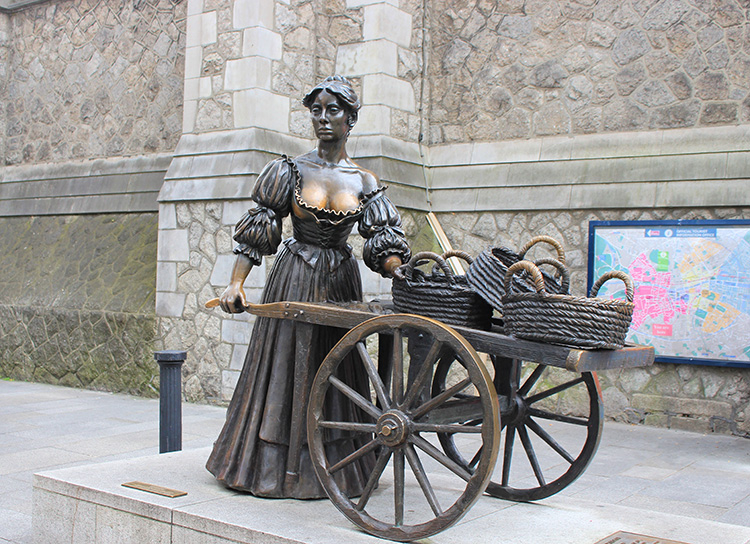
Molly Malone is another of the many folk songs we use in Let's Play Music. And like most folk songs, there is no proof that it ever actually happened. This song comes from Ireland and is so traditionally Irish that in 1998, the then-mayor of Dublin declared June 13 as "Molly Malone Day," and commissioned a statue that quickly became a tourist attraction. Many Irish musicians have covered the tune, including U2's BonoSinead O'Connor, and The Dubliners. The version done by Possibly Irish includes traditional Irish harmonization, costumes, instruments, and dances. I actually love how each of these musicians take a nationalist folk song, totally make it their own, but still include such a proud Irish feel!


Wednesday, January 28, 2026

Orange Roots #3

NEED TO KNOW

Orange Roots #3: Your Orange Roots are doing great! It's fun to see them transitioning into real musician's language, counting with numbers and "ands" instead of bugs, finding chords in root position, and identifying the roots of chords not in root position!

T-SHIRTS: I buy Let's Play Music T-shirts for all of my first-year students. If you would like a shirt for your 2nd or 3rd year students for $11, I can include them in my order. Third year students will not wear the LPM shirts at the end-of-year recital (they will dress fancy like the real musicians they are), but if they've grown out of their shirt and want another one, here's your chance. If you'd like to order, fill out this form and venmo me $11. (If you don't venmo, you can bring a check to class or include it in the next tuition payment.) 

NEXT YEAR: If you missed the discussion on what to do after Let's Play Music, here is a link to my post outlining some great options. Like I said last week, I will consider doing a Bridge class during the times when my own kids are in school if there are enough folks who can come during the day. Let me know. 

HOMEWORK HELP: This week's homework includes two sections about the roots of the chords.
*The first section is building root position triads. It gives the root, then your student will add a third and a fifth (build a snowman chord on the note given), then spell it below. As a reminder, the skipping snake chant is "C-E-G-B-D-F-A-C." If you'd like to make your own alphabet circles to make a skipping snake at home, you can print them out at this link. Disregard the part that says to print on green cardstock. Print it on whatever color or type of paper and make yourself a music alphabet tool!
*In the second section, it asks them to find the root in different chords. Some of the chords are in root position (snowman shaped), so the root is down below. This week in class, we learned a new way to find the roots of chords that are NOT in root position. "The note above the gap's the root, it just has rearranged!"

SONGBOOK AS WORKBOOK: We looked at our new song, John Jacob Jingleheimer Smith, and identified the roots of the chords, writing them in the space between the staves. Then we discovered that the left hand is playing the roots! We finished the activity by writing in the first note, the root of the chord which is an F.


GOOD TO KNOW

JOHN JACOB JINGLEHEIMER SMITH: This fun song will get us learning a new style of bass root accompanying. Once we understand this, we can improvise with a two-handed marching style. Check this video out for practice help. Also, this song is another opportunity to feel a half cadence (end on a yellow chord instead of red).

I CAN BUILD A TRIAD: Like the song says, "Pick any note to be the root... then add a third, and then a fifth!" Now that we are learning chord structure, our skipping snakes will help us to chant and spell each of our triads. Like any native language, you speak (sing) it first, then learn to write it. Want to practice with your own skipping snakes at home? Here again is the link to print out this file and have fun with your own alphabet circles! It says to print on green cardstock and laminate... you can print on whatever color you want and laminate/magnet/leaveblank/whatever you'd like!

FUN TO KNOW

Like most folk songs, there are a lot of variations of our "John Jacob" song. I remember singing it as 'Schmidt' instead of 'Smith' as a kid, and instead of 'look there he goes again,' we would belt out 'la la la la la la la!'

It can be a lot of fun to take a familiar tune and improvise in fun and crazy ways. Which varation does your family like best? Rock'n'RollSesame Street, or Sing-a-ma-jig?

Thursday, January 22, 2026

Orange Roots #2

NEED TO KNOW

Orange Roots #2: Your students are amazing! They are understanding complex musical ideas, and are using correct musical language to describe them! I love it!

NOTE-NAMING: Flashcards and/or note naming apps are still in your students' weekly homework outline, when it asks for "Purple Flashcards." Do what works for your kid. Some students do well with flashcards, some get frustrated by them and do better with the keyboard games and apps. The "Don't Swipe My Sharp" game from Celebration Day last month is a great option. If you haven't gotten an app and want to try them, here is a link to the post where I outlined the top note-naming apps I've found. If you have another app you love, let me know! There is a spot in the homework section that asks you to time your student. If your kid reacts well to timing, then go for it. If timing adds a level of stress and doesn't accurately show his performance, then don't. What matters to me is that the spend time on it, whether with cards and keyboard games or with an app. You can write in there that they do it in game form if that is less stress for your student.

SONGBOOK AS WORKBOOK: We added another layer in Cockles and Mussels. The left hand is mostly all root position chords, so we wrote the name of the root of each chord. The student just needs to put the left hand pinky on the root and play a snowman-shaped chord! This week, the practice outline says to practice RH and LH separately, then combine them when they're both solid. If practicing both hands is too much for your student, focus on the left hand for this song. They can learn all the concepts by playing the left hand and singing the melody.


NEXT YEAR: This is the last semester of the Let's Play Music curriculum. If you didn't check it out last week, here is an outline of what you could do next. One of the options is the Bridge program (more details in the link), which was created by an LPM teacher and sponsored by the LPM company. I have taught the program and love what it covers. It really is the best next step for LPM grads. I am considering teaching Bridge in the fall on Wednesday mornings. I know that Wednesdays are late start in West Ada district. Keep in mind that there are never Parent Days in Bridge, so you don't have plan for babysitters! Let me know and I'll see if there are enough students to make it work. There is a Bridge teacher who lives by Capital High and another at Eagle and Floating Feather who both have after-school class times.

NEXT YEAR AGAIN: On the list of options for next year is retaking 3rd year. It's a great experience! We cover so much stuff in 3rd year that a redo can be really helpful, especially if your student resists playing hands together! If you want to retake 3rd year, let me know so I can include your student in my schedule plans for the fall. 

AND SPEAKING OF NEXT YEAR: Do you have any future Let's Play Music students? Or have friends with littles who want their kids to be just like yours? Let me know so I can add them to my waiting list! Kids who will be 4 can start Red Balloons in the fall! Early registration opens in March! 

GOOD TO KNOW

C MAJOR SCALE FINGERING: If you need a visual of the C major scale with both hands, here's a link to a skills video.


ECHO EDISON: The newest member of our Echo family has arrived! He is Echo Ed and Echo Edna's grandfather, Echo Edison! He likes to ask musical questions and have the kids give him musical answers. He will help us create our compositions this semester.

FUN TO KNOW

We call the newest puppet show "Monsters," but the real name is Dance of the Knights from the ballet 'Romeo and Juliet' compost by Sergei Prokofiev (the same guy who wrote Peter and the Wolf). It comes from the section of the story where the Montagues and the Capulets are showing off to each other how tough they are. The themes are layered on top of each other, and it's fun to identify the individual layers of sound. I love this fun post on our Let's Play Music blog imagining all of the characters from the Monsters Puppet Show as friends in their LPM (Lamba Pi Mu😉) fraternity at Monsters U. So much fun!


Tuesday, January 13, 2026

Orange Roots #1

NEED TO KNOW

Orange Roots #1: What a great first lesson! There is always so much info to pack in while I have parents in class once a month. Our last semester of Let's Play Music is packed with amazing musical concepts that are included in high-school and college level theory classes. This is going to be an amazing ride!

PRACTICING: There is a LOT of information in Orange Roots. The official purpose of the Let's Play Music company is "We enrich lives through the power of music." The goal at this point is exposure and understanding, but not necessarily performance mastery. The ability to play hands together is definately a developmental stage, and for some kids, those nerves aren't connected yet and playing with both hands might be frustrating. Other kids already have that brain connection and thrive with playing hands together. In class, I will always offer the option of playing with one hand or both hands. Do the same thing in their practicing at home! I will outline in the parent notes the "most important" parts of the songs, so if your student gets frustrated you can spend the bulk of the time on those. The important part is to develop a lifelong love of music. Depending on your and your student's goals for the class, you could focus on other musical experiences: listening to the audio tracks, reenacting the puppet shows, tinkering on composition ideas, or playing music games. You are completely in control of what your out-of-class "practice" time looks like. 

ORANGE ROOTS MUSIC: Make sure that you have access to the Orange Roots music on the LPM app. If not, update the app and/or re-download it. If it's still not there, please call the LPM office. They'll be able to fix it for you! And they're so nice about it! I also have CDs for those who requested one (during the Parent Orientation last August) but totally forgot to pass them out. I'll get them next week.

SONGBOOK MARKING: For your practice this week on Molly Malone, the goal for the week is to learn the right hand part, and the book says to learn a new line each week. The printed lines don't match up with the musical lines, so I had the students mark what "lines" to learn each day. Also check below in the "Good to Know" section about the technique purposes of this song to know what to focus on in practice time.


MORE SONGBOOK MARKING: We're revisiting our Primary Chords Song, but this time putting the chords in root position! Because they are all snowman shaped (which we now know as root position), we colored them their red, yellow, and blue colors to keep them identified. The second two lines are in home position, the way we've been playing them forever so we didn't color them. We also wrote the name of the root.


WHAT TO DO AFTER LET'S PLAY MUSIC?: This is the last semester of the Let's Play Music curriculum. I have a whole post on what to do next. You can scroll to the next post to see it or use this link.

TUITION: Thank you to those who got tuition in this week! If you haven't yet, I'll send a request/reminder.

GOOD TO KNOW

ONLINE CLASSES: The online video of the first class of each semester is available for free on YouTube. If you missed class this week, or would like to check out what the "makeup videos" are like, check it out here!


PRIMARY ROOT CHORD SONG: Wow! We had to do some hard thinking during class with this song! Playing our old familiar song in a new way is helping us understand root position and how to play chords when they are in root position. We are jumping all over the keyboard to play this song! Once your thumb finds the root, you simply play a snowman shaped chord!

COCKLES AND MUSSELS: Our first repertoire song this semester is an old Irish folk song from the 1800s. This week, we are focusing on learning the melody. The fun part of this song comes soon, when we look at the ROOT position chords in the left hand. The LPM blog has a great post with fun facts and practice videos dedicated to Cockles and MusselsIn the back of your songbook, you can see that the Showtime skills for this song are all in the left-hand accompaniment. If your student is going to learn one hand and not the other, make it be the left. This week do the right (we haven't started the left hand yet), but once we add in the left, practice the left hand first and the right hand secondary.

LET'S FIND THE ROOT: Ever wonder why we learn so much about chords in Let's Play Music? Chords are the building blocks of songs and harmonies! In the Orange Roots semester, we will finally analyze and label the chord theory and structure that our fingers have been playing and singing since we were Red Balloons! The idea of "it's not about the shape, it's about the pieces" will take on a new meaning as we label those pieces and discover the most important one... the ROOT! If you need a little help with this, here is a link to a parent help worksheet that dissects the lyrics to Let's Find the Root with visual examples nad explanations to better help you understand the theory concepts I am teaching in class.

FUN TO KNOW

Our newest puppet show is from Prokofiev's Romeo and Juliet, and is officially called Dance of the Knights. The story we incorporate is all about Monsters. Here is a link to printable monsters mini puppets and a link to a monsters puppet show coloring page.


Tuesday, January 6, 2026

What to do after Let's Play Music


What to do after Let's Play Music?


Your students have spent the last three years building a foundation of musical understanding and they are ready for the future! There are so many options for their musical paths! Here are just a few.


BRIDGE: The Bridge program was developed by a Let's Play Music teacher specifically for the LPM graduate to "bridge" the distance between LPM classes and private piano lessons. I have taught this curriculum and I LOVE it. It really is the next logical step after LPM! You can read more about Bridge at this post or check out the LPM site and video hereBridge can be presented a few ways. I'll outline them below.


BRIDGE GROUP CLASSES: Bridge can be taught in a group setting, similar to LPM. 

*There is an amazing Bridge teacher who lives by Capital High. Her name is Erika Gray and she is awesome. She has group lessons that your student would love, and is also an LPM teacher, so she knows how your student has learned so far. Her classes are weekly for 75 minutes and parents do not attend class. The classes go for 8 months (with the school year, just like LPM), and are $90/month, plus a $35 registration fee to Erika. You would purchase the materials separately from the letsplaymusicsite.com webstore. Here is the link to a flyer from Erika (this is the flyer from 2023... I'll reach out to her for any updated information and post it here when I hear). Contact Erika at erikagraylpm@hotmail.com for more information on her classes. 

*There is a teacher who lives by Eagle Road and Floating Feather named Kandace Riggs and while she doesn't teach LPM, she had enough LPM grads come to her that she became a fan of the program and now teaches Bridge. You can contact her at 208.995.7885 to get more information on her Bridge plans for the fall. If she doesn't have enough interest in Bridge, she is still a great next step for lessons after LPM.

*I am willing to teach a Bridge class if I can get enough students who can come during the time my own kids are in school, perhaps on Wednesday morning when West Ada has late-start days. Let me know if you're interested and I'll see what happens.


BRIDGE BOOKS: Unlike Let's Play Music materials, you don't have to be registered in a class to buy the books. The Bridge materials are available for anybody to purchase and use. You could buy the Bridge books and ask your favorite private teacher to use them for your musician. This would help the teacher see the flow of how your student has learned and the things they know, adding to their theory understanding in a perfect stair-stepping way. If your teacher is willing to use a different curriculum than what she is used to, this is a great option.


BRIDGE CURRICULUM: Also unlike Let's Play Music, the Bridge curriculum is available for anybody to purchase. You (or your student's private piano teacher) can buy the outline of the 30 lessons that show exactly HOW to most effectively use the Bridge materials. The purchase price for the downloadable materials is around $300. 


CONNECTIONS BOOK: Whether or not your student does the Bridge program, they will receive a Connections Book at the end of the last semester of LPM, which is an introduction for your new teacher to the skills and concepts they have gained through the LPM program. It does not add to their knowledge like the Bridge books do, but it does give the new teacher a way to see your student's skills. 


PRIVATE LESSONS: Click here for a list of teachers that have taken LPM students before and understand what they know. If you have a teacher in mind who is not on this list, give me her contact information and I can send her information on understanding what LPM teaches.


RETAKE LPM 3RD YEAR: The 3rd year of Let's Play Music (what your student is enrolled in and experiencing now) is stuffed full of theory, technique, repertoire, etc. Some students can understand the basic concepts but struggle with performing them on the keyboard, or they might play everything hands separately. That is absolutely fine and they are absolutely getting the information in their brains and they are absolutely playing at a developmentally appropriate level. Some of these students would enjoy taking 3rd year LPM again. This can allow the concepts to settle in their brains and give them extra time to cement everything before moving on to the next step. The students I have had retake third year do so with more confidence and joy than they had the first time through. If you're considering retaking 3rd year, let me know so I can include that in my class planning for the fall.


SING ACADEMY: If you're looking for a way for your student to stay in music, but not necessarily with piano-only-focused lessons, you can check out Sing Academy. Justin Neilson is an amazing musician and educator. He groups students of similar ages and backgrounds into bands, and helps them work together to make amazing music. He shows them how to play keyboards, guitars, bass, drums, and lead vocals. It is phenomenal and I wish it would have been around when I was younger! Both of my own kids have been in bands and private lessons with Justin and they love it. His studio is on Horseshoe Bend Road, close to the bike park. You can contact Justin at singmusicacademy99@gmail.com or 208-794-0007. 


Bridge

Bridge is a program developed by Let's Play Music, and is designed to "bridge" the student from LPM classes to private lessons. The following information comes from the LPM company.  The Bridge section of the LPM website has more information in a clean layout.


Let’s Play Music BRIDGE is the next step for Let’s Play Music Graduates who want to continue total musicianship education with a piano focus.

What is the Let's Play Music Bridge Course?
Let's Play Music Bridge is an additional year of instruction available to Let's Play Music Graduates and piano students at a 1A & 1B Level. The Bridge course will reinforce concepts and skills learned in Let's Play Music while progressing with additional instruction and skills needed for success in the students' piano and music education going forward. The small group setting is an engaging, fun and familiar setting for Let's Play Music students, and a complete musicianship focus continues to build a well-rounded depth of music education unparalleled by any other program.

Why is Bridge so important?
Let's Play Music students have an amazing foundation, but much that has been gained may be minimized or lost without the proper teacher who understands where they are in their studies. Their next teacher should know how to communicate with them and apply this musical foundation and knowledge. This Bridge course will help them build on their excellent foundation and bridge any private piano communication gap so they can transition smoothly into private piano lessons or any other music lessons they might be interested in. Let's Play Music graduates are perfectly primed to excel in their music studies and the Bridge course will help them succeed!

The Curriculum
The Let's Play Music Bridge curriculum has been carefully crafted to solidify skills learned across the three years of Let's Play Music. The students will have the opportunity to reinforce the many newly introduced concepts and skills learned in the 3rd Year of Let's Play Music, such as numerical counting and rhythm skills up to sixteenth notes, scales and chord skills in varying keys, composer and classical music knowledge, composition skills, accompaniment styles, key signatures, time signatures, note names and staff placement, music theory and sight-reading skills just to name a few. All these concepts will be reviewed and expanded on throughout this important year of musical transition. They will be taught about the new yellow chord (the V7 chord) along with many other important concepts, skills, symbols, and labels that will help ensure that their abilities don't get 'lost in translation' as they progress. Both individual instruction and engaging group instruction are important in their progression. Classes will be held in small groups of up to 5 students and will include segments of individual instruction time as necessary. Bridge teachers have the ability to customize assignments and selections of repertoire as needed to create a learning environment that is ideal for each student throughout the school year.

Tuition Guidelines Review

Tuition Information

At the beginning of each semester, I send out an invoice that includes the entire tuition that will be due for that semester. If you look at the invoice, you will see that it is broken down to four payments, each due at a different date throughout the semester. This semester the dates are January 9/10, February 6/7, March 5/6, and April 9/10. These dates are also marked on your class calendar (inside the front cover of your student's workbook). (Lessons #1, #5, #9, and #13... I do it this way because those are the lessons that parents attend during 2nd and 3rd year classes. When I started teaching, most people were paying by check, and it made sense to have it due on days parents attended. I've just stayed with that schedule because it makes sense to my own brain.)

TIMEFRAME
*You can pay all of the semester tuition at once and not have to deal with it any more after that.
If you pay it in full, I'll send a receipt that you've paid and you won't get any other invoices throughout the semester.

*You can pay in installments and not have to pay it all at once. 
If you pay it in installments, you'll get a receipt recording the portion that you've paid for, and you'll also get another invoice the week before the next installment is due. 

METHOD
You can pay with:
*a check in class
*with a card through the Wave app with the link on the invoice. 
It honestly doesn't matter to me which way you pay, but because so many folks ask, I do pay a fee when I am paid through Venmo or Wave. If you pay by check, there are no fees. 

PROBLEMS
If something seems off with the payments and/or receipts, let me know and I'll recheck the details on my end. I'm quite careful, but I'm not perfect!

THANK YOU!
I appreciate more than I can express when folks pay tuition on time. It makes it so I can focus more on your kids and their music!

Orange Roots #9

NEED TO KNOW Orange Roots #9: Thank you for coming to class and for making this journey fun and meaningful for your kids! SPRING BREAK:  No ...